The Quiet Catastrophe I Didn’t See Coming
I thought I was prepared for a lot of things in 2024, but I wasn’t prepared to watch my local library system crumble in real time. When the city council announced budget cuts that would shutter half our branches and slash operating hours at the survivors, I felt that particular kind of grief that comes with losing something you didn’t realize you’d taken for granted. The American Library Association Reports would later confirm what many of us suspected: over 2,400 public library branches across the country either closed permanently or drastically reduced their hours due to municipal budget shortfalls.
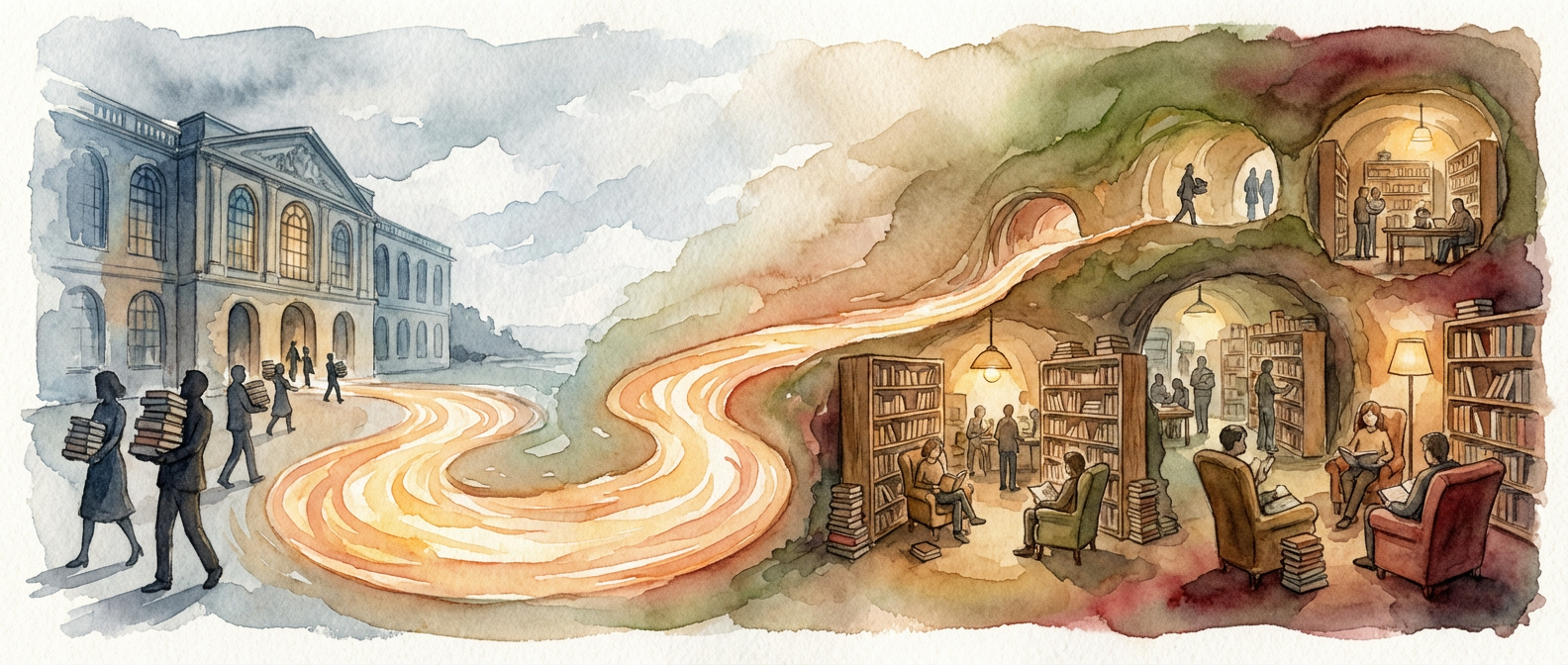
What I expected was a quiet death of community literacy, a slow fade into a world where access to books became even more stratified by income and geography. What I got instead was something I never could have predicted: the most beautiful, chaotic, and surprisingly effective grassroots book sharing revolution I’ve ever witnessed. Turns out when you take away people’s libraries, they don’t just accept defeat and switch to audiobooks from their phones. They get creative. They get organized. They build something entirely new from the ground up.
This isn’t the story I thought I’d be writing about 2024’s literary landscape, but it’s the one that matters most. Because while I spent months mourning what we’d lost, millions of readers were already busy creating what would replace it.
The Underground Networks That Bloomed in Parking Lots
The first sign that something was shifting came in March, when someone on Reddit started a subreddit called Library Angels. The premise was simple: post your location and the books you’re willing to share, then coordinate exchanges with other readers in your area. Within weeks, parking lot handoffs became as common as coffee dates, and what started as a small community of frustrated readers had exploded into a global network. By year’s end, Library Angels had 340,000 members spread across 47 countries, facilitating everything from rare first edition loans to massive community book swaps.
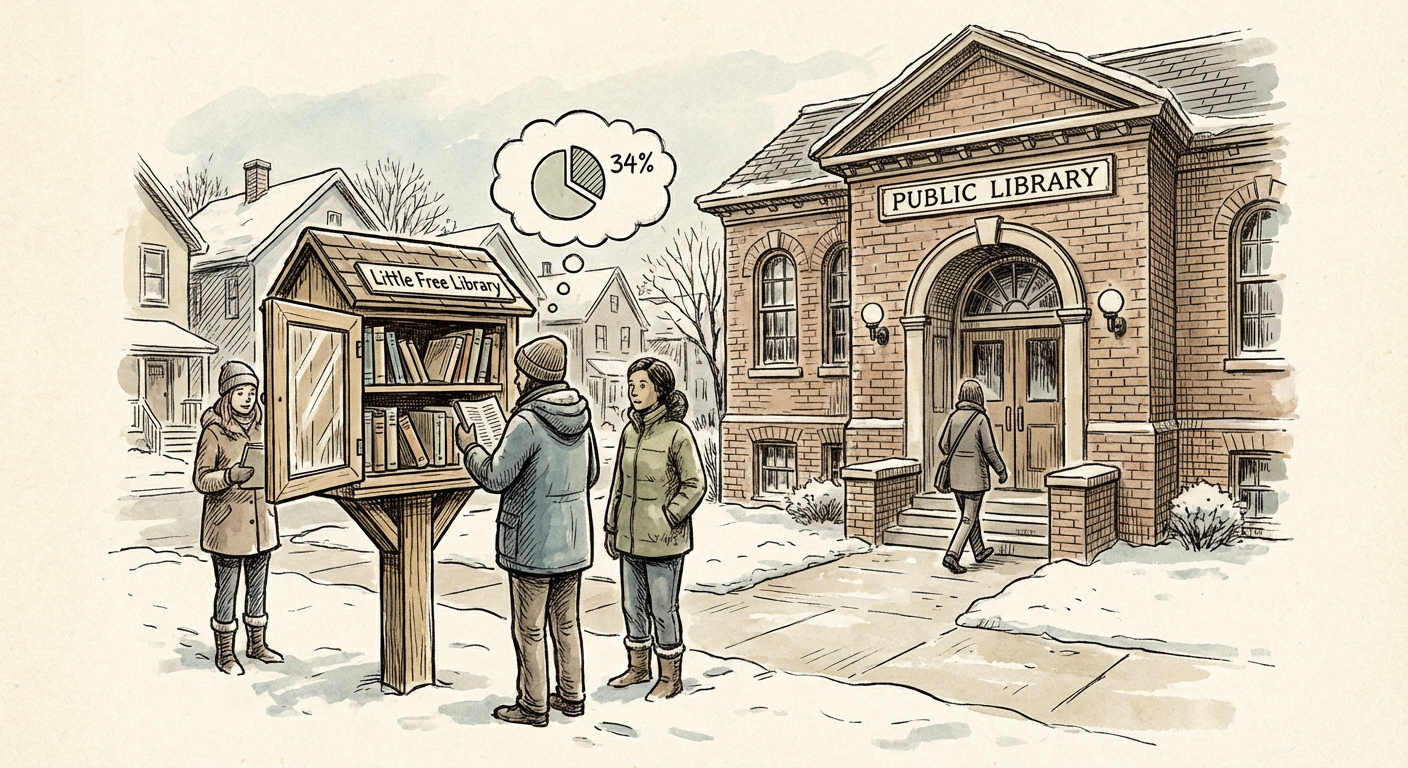
But the real magic was happening in suburban driveways and urban street corners, where Little Free Libraries were sprouting like literary mushrooms after rain. The Little Free Library Official Registry recorded an 89% increase in new installations throughout 2024, reaching over 150,000 locations worldwide. These weren’t just the quaint neighborhood book boxes I remembered from before. They were sophisticated community hubs with weather-resistant designs, curated collections, and dedicated volunteer networks maintaining them like tiny independent libraries.
I started paying attention to these informal networks after my own desperate search for a copy of Jennifer Egan’s newest novel led me to a Facebook group called Books Without Borders. What I found there was a thriving ecosystem of readers who had organized themselves into geographic clusters, maintaining shared spreadsheets of available titles, coordinating group purchases of new releases, and even establishing informal lending periods and return protocols. It was library science happening at kitchen tables and through text message chains, and it was working better than anyone had a right to expect.
The Economics of Sharing What We Love
The numbers tell their own story about how dramatically reading habits shifted when traditional library access disappeared. Used book sales skyrocketed by 156% on platforms like ThriftBooks and Better World Books, but this wasn’t just people buying more books for themselves. Readers were purchasing multiple copies of popular titles specifically to share with their local networks, treating book ownership as a community investment rather than a personal collection.
I watched this happen in my own book club, where members started buying extra copies of our monthly selections not just for backup purposes, but specifically to pass along to interested friends and neighbors who couldn’t access them through traditional channels. What began as practical problem-solving turned into something more generous and intentional: a recognition that the joy of reading multiplies when it’s shared, not hoarded.
A December study from Pew Research revealed that 34% of Americans now rely primarily on community book sharing rather than traditional library services. That statistic initially depressed me, representing as it does the failure of our public institutions. But the more I thought about it, the more I realized it also represents something remarkable: proof that readers will find a way to read, even when the systems designed to support them collapse.
What We Lost and What We Found
I’d be lying if I said this grassroots revolution completely replaced what we lost when libraries closed. The quiet study spaces, the research databases, the children’s programming, the community meeting rooms, the professional librarians with their deep knowledge and their commitment to intellectual freedom. These losses are real and ongoing. No amount of creative book sharing can replicate the full scope of what a well-funded public library system provides to a community.
But what emerged in 2024 taught me something I hadn’t expected to learn about how books move through the world and why that movement matters. The informal networks that readers built weren’t just about accessing titles. They were about creating new forms of literary community that felt more personal and more intentional than what many of us had experienced before. When you have to text someone at 10 PM to arrange picking up their copy of Tomorrow, and Tomorrow, and Tomorrow, you end up talking about why that book mattered to them, what they highlighted, whether they cried at the same parts you did.
These accidental communities developed their own customs and courtesies: the practice of including handwritten notes about why you loved or hated a particular book, the informal book clubs that formed around shared lending circles, the way people started curating their contributions to Little Free Libraries with the same care professional librarians bring to collection development. What we built wasn’t a replacement for libraries. It was something entirely different, messier and more personal and surprisingly tough.
The Revolution That Taught Me to Read Differently
By the end of 2024, I realized that this accidental revolution had changed not just how I access books, but how I think about them. When every book comes with a story about how it traveled to reach you, which neighbor loved it enough to recommend it, which stranger left it in a Little Free Library with a note about its emotional impact, which member of your online book-sharing group drove across town to put it in your hands, reading becomes a more social act than it used to be.
There’s something deeply satisfying about knowing that the paperback copy of The Seven Husbands of Evelyn Hugo I’m currently reading has been loved by at least six other people in my city, each of whom took the time to pass it along to someone else who might need it. That kind of literary citizenship changes the experience of reading in ways that surprise me even now, months into this new normal.
The great library exodus of 2024 was supposed to be a catastrophe for readers, and in many ways it was. But it also revealed something beautiful about how desperately and creatively people will work to keep books moving through their communities. If you’re navigating your own book-sharing networks, or if you’re curious about how these informal systems work in practice, I’d love to hear about your experiences. Because if this year taught me anything, it’s that the best stories about books are the ones we tell together.