The Strange Mathematics of Literary Survival
Here’s something that keeps me up at night: for every author we still read today, dozens of their contemporaries have vanished completely. Not because they were terrible writers, but because literary survival operates on rules that have almost nothing to do with quality. When I’m hunting for new authors to fall in love with, I’ve started thinking like an archaeologist rather than a consumer, digging through the sediment of publishing history to uncover writers who got buried by accidents of timing, marketing, or sheer bad luck.
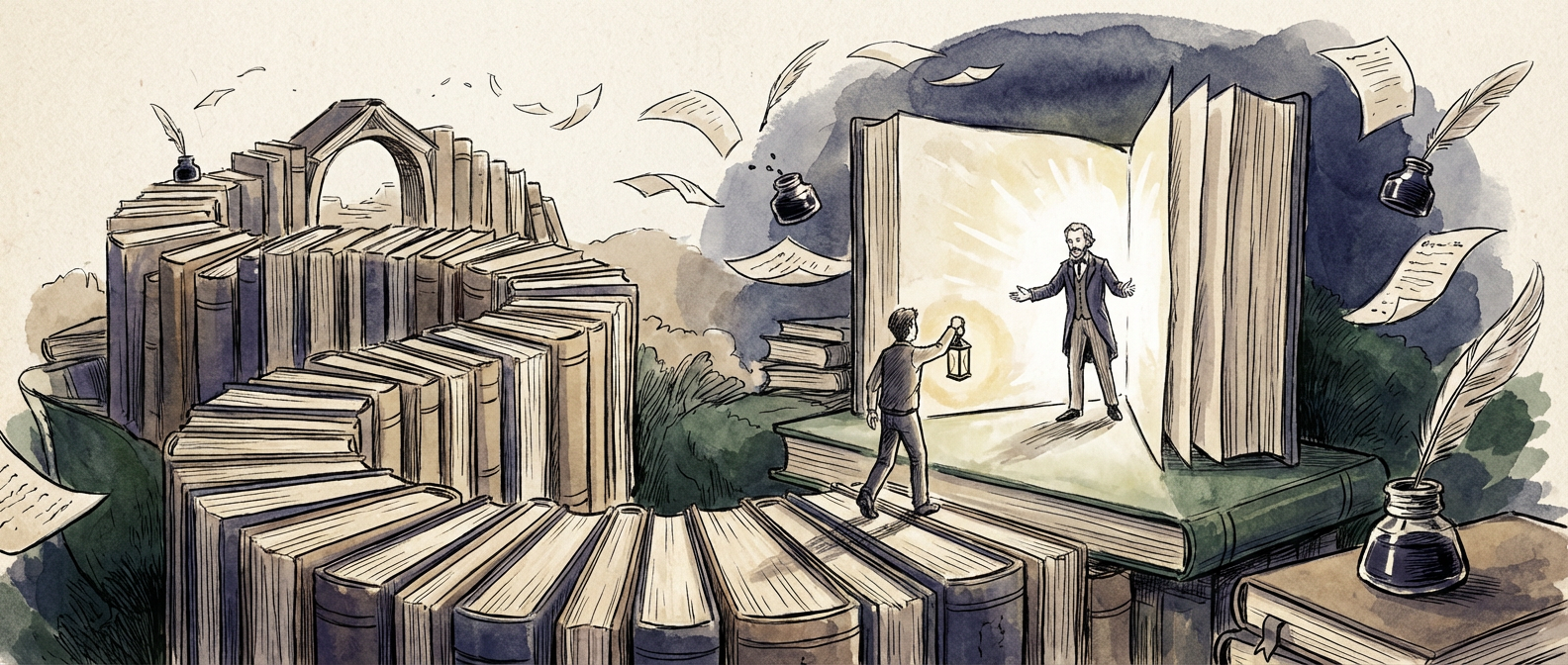
The exercise I call the Deserved Obscurity Test has become my secret weapon for finding authors who feel genuinely new to me. It works like this: I pick a year, any year from the past century, and research what else was being published alongside the books we still consider classics. The results are always shocking. In 1925, while everyone was reading “The Great Gatsby,” there were dozens of other novels competing for shelf space. Most of them deserved to disappear. But some didn’t.
This isn’t about nostalgia or claiming that old books are inherently better. It’s about recognizing that our current literary world is only a fraction of what was actually available, filtered through systems that prioritize certain voices, themes, and publishing houses over others. When you start reading with this archaeological mindset, you begin to see patterns in what gets preserved and what gets forgotten. More importantly, you start finding writers whose work feels startlingly contemporary because it was ahead of its time.
Mining the Margins of Famous Movements
Every literary movement we learned about in school had peripheral figures who were doing equally interesting work but lacked the connections, timing, or demographic advantages of the writers who became household names. The Harlem Renaissance produced more than Langston Hughes and Zora Neale Hurston. The Beat Generation included women and writers of color whose work was systematically overlooked. Even the male-dominated modernist movement had female contemporaries whose experimental techniques were dismissed as derivative when they were actually pioneering.
I discovered Meridel Le Sueur this way, a Depression-era writer whose unflinching portrayals of working-class women’s lives were deemed too political for mainstream success. Her prose has this muscular urgency that makes contemporary literary fiction feel bloodless by comparison. Or take Dawn Powell, whose satirical novels about New York society were praised by writers like Gore Vidal and Ernest Hemingway but never found a sustained readership until decades after her death.
The key is learning to look sideways at literary history. When you read about a famous writer, pay attention to who they were corresponding with, who they were arguing with, who they were teaching or learning from. These networks reveal entire ecosystems of creativity that got flattened into single-name narratives. Literary archives and correspondence collections are goldmines for this kind of detective work, revealing the collaborative nature of what we often think of as solitary genius.
The International Translation Lottery
One of the most arbitrary filters in literary survival is translation. Entire national literatures remain largely unknown to English readers not because the writing lacks quality, but because of publishing economics and cultural politics. The authors who do get translated often represent just the tip of the iceberg, chosen for reasons that have more to do with what Western publishers think will sell than with what’s actually being written.
I’ve found some of my most transformative reading experiences by deliberately seeking out authors from countries whose literature I know I’m underexposed to. Not the obvious choices that win international prizes, but the writers who are beloved in their home countries but remain untranslated or poorly distributed. This requires some patience and detective work, but the payoff is enormous. Reading Clarice Lispector before she became fashionable again gave me access to a completely different way of thinking about consciousness and narrative structure.
Small and independent publishers are your allies in this search. They’re more likely to take risks on authors who don’t fit neat marketing categories. Archipelago Books, Open Letter Books, and similar presses consistently publish work that expands what English-language readers have access to. Their catalogs are worth browsing not just for individual titles, but for patterns in what kinds of voices they’re championing.
Genre Boundaries as Archaeological Sites
Some of the most interesting writers get lost in the gaps between genres, dismissed by literary critics for being too commercial and by genre readers for being too experimental. These boundary-crossers often end up in a kind of publishing purgatory, neither fish nor fowl. But they’re also where some of the most innovative work happens, because they’re not constrained by the expectations of any single tradition.
Science fiction and fantasy, in particular, are full of writers whose work transcends their genre classifications but gets ignored by mainstream literary culture. Ursula K. Le Guin spent decades making this argument before finally getting the recognition she deserved. How many other writers are still waiting for that recognition? I’ve found extraordinary work by diving into the backlists of genre publishers and looking for authors who were clearly pushing formal boundaries but got shelved in sections where literary readers wouldn’t find them.
The same principle applies to other traditionally marginalized categories. Romance writers like LaVyrle Spencer were crafting complex emotional narratives that rival anything in contemporary literary fiction, but the stigma attached to their genre kept them out of serious critical consideration. Mystery writers like Dorothy Sayers were experimenting with narrative structure and social commentary in ways that influenced later literary movements, but their innovations got overshadowed by their commercial success.
Building Your Personal Literary Archaeology Toolkit
The most effective way to find your next favorite author is to develop a systematic approach to literary archaeology. Start by identifying your blind spots. What decades, countries, or genres do you automatically skip over? What assumptions do you make about certain types of writers or publishers? These gaps in your reading are exactly where you’re most likely to find something that surprises you.
Use library databases and academic resources, not just bestseller lists and algorithmic recommendations. WorldCat lets you search for books by publication year, country, and subject in ways that Amazon never will. University library websites often have subject guides created by librarians who know their collections intimately. These resources help you move beyond the echo chamber of contemporary taste-making.
Keep a running list of interesting names you encounter in footnotes, acknowledgments, and dedications. Pay attention to who contemporary writers cite as influences, especially when they mention authors you’ve never heard of. Follow these threads backward and sideways, building a map of literary relationships that extends far beyond the canonical reading lists. The goal isn’t to be completist or to prove how well-read you are. It’s to stay genuinely curious about the vast landscape of human storytelling that exists beyond what gets actively promoted to you.
What writers have you discovered by accident, and what made you realize they’d been unfairly overlooked? I’m always looking for recommendations that come with stories about how someone stumbled across a forgotten treasure, because those discoveries feel the most genuine and exciting to share.