The Numbers Are Staggering, and They Tell a Story
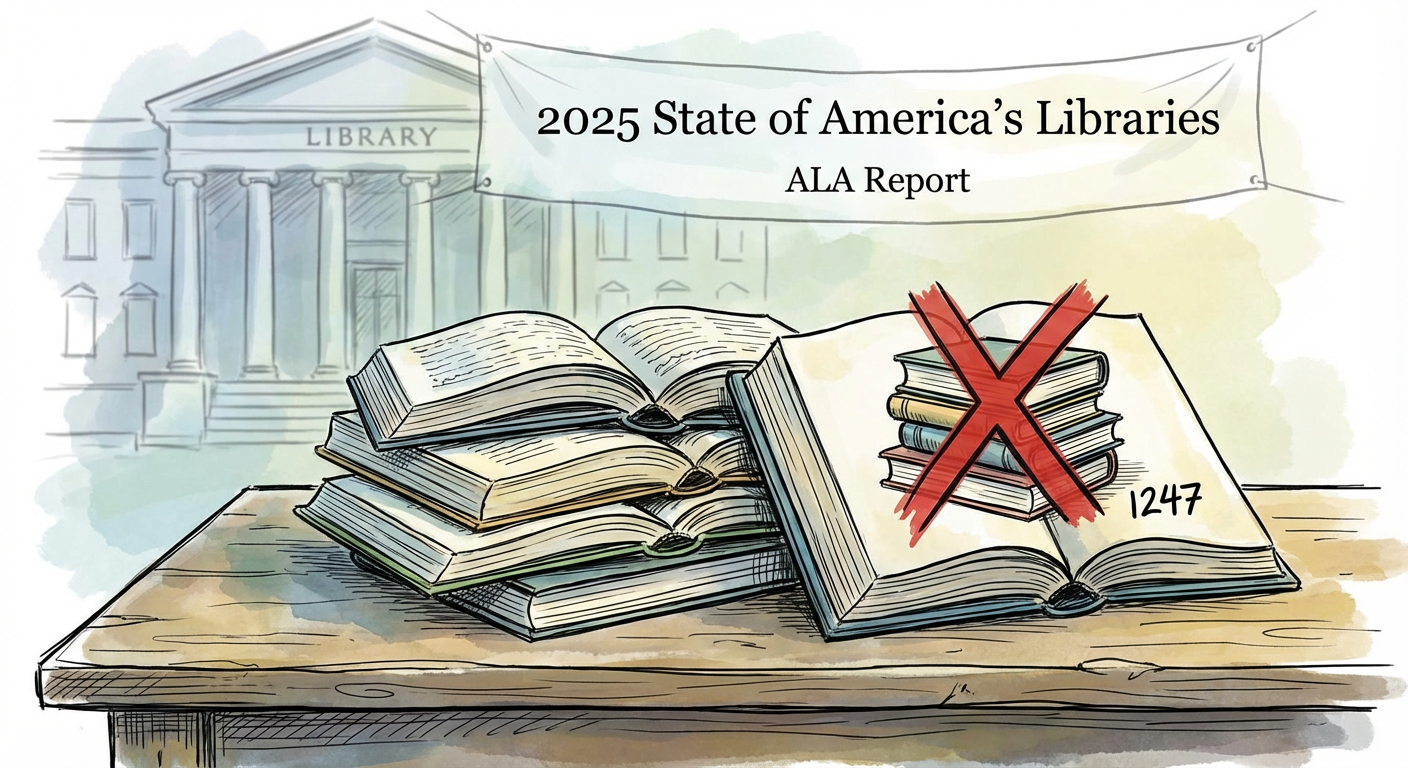
I spent last night scrolling through the American Library Association’s newly released data on book challenges and bans, and I need to tell you about it because I genuinely cannot stop thinking about what these numbers mean. In 2024 alone, 1,247 unique titles were either challenged or banned in American schools and libraries. That is the second-highest total the ALA has ever recorded in their tracking history. To put that in perspective, we are talking about nearly four books per day being removed from shelves or restricted from access. These are not abstract statistics. These are the books your friends recommended. These are the stories that might have changed someone’s life if they had been allowed to read them.
What strikes me most is not just the volume but the shift in how these decisions are being made. For the first time since the ALA began tracking this data, state-level legislation has become the primary driver of censorship rather than individual parent complaints. This is something fundamentally different from what we have been fighting against for decades. We are no longer primarily talking about a single parent objecting to a book in their child’s classroom. We are talking about structural, legislative decisions that affect entire regions at once. The battlefield has changed, and that changes everything about how we need to respond.
The Geography of Restriction: Where Power Is Concentrated
If you want to understand where the real pressure is being applied, look at the PEN America Banned in the USA 2025 report. Three states accounted for fifty-eight percent of all school-level book bans enacted through formal policy during 2024 and 2025: Texas, Florida, and Missouri. Let me say that again because I want it to land properly. More than half of all formal book bans in American schools happened in three states. This is not a national phenomenon spreading evenly across the country. This is concentrated power being wielded in specific places, which means this is something we can actually track, understand, and potentially challenge directly.
The reason I keep circling back to this geographic concentration is that it suggests something hopeful underneath the distressing headline. If the challenge is localized, so are the solutions. Teachers, librarians, and readers in communities outside these three states have more breathing room than we sometimes acknowledge. But we also have responsibility. The decisions being made in Texas, Florida, and Missouri are being watched by legislators and school boards across the country. They are being modeled. They are being replicated. This means that understanding what is happening in these states matters to all of us, regardless of where we live.
What the American Library Association State of America’s Libraries 2025 Report Does Not Say
Here is what fascinates me about data: it tells you what is happening, but it does not always tell you why people are reading anyway. Yes, 1,247 books were challenged or banned in 2024. But in the same year, something remarkable also happened. The twenty most frequently banned books saw their sales increase by an average of forty-one percent compared to the year before they were banned. Publishers and readers often call this the “banned book bump,” and it is real. Controversy does something counterintuitive. It makes people curious. It makes people defiant. It makes people buy the book and read it and talk about it.
I mention this not to minimize what is happening but to put it in context. Yes, young people in some school districts cannot access certain books through official channels. But some of those books are being purchased more widely than ever before. They are being read in living rooms and on park benches and at the kitchen table. They are being discussed in book clubs and on social media and in those late-night text conversations where real conversations happen. The bans create barriers, absolutely. But they are not absolute barriers. And in some ways, they make the forbidden books seem more necessary, more urgent, more true.
The Libraries and Bookshops Are Showing Up
What kept me awake last night in the best way was not the challenge data but the response data. Over 4,500 libraries and bookshops participated in Banned Books Week 2025. That is a twenty-two percent increase from participation the year before. In human terms, that means librarians and booksellers in cities and small towns across this country are standing in front of their communities and saying: these books belong here. This is active resistance happening in real time, in spaces that matter deeply to readers.
I have always believed that libraries and independent bookshops matter in ways that are hard to overstate. They are the places where you discover something you did not know you needed. Where the teenager in the conservative household finds the book that tells them they are not alone. Where the immigrant finds stories in their language. Where the reader with unpopular opinions finds intellectual companionship. The fact that these institutions are showing up for Banned Books Week in record numbers suggests that there is awareness, that there is resistance, that there is still faith in the power of the book and the freedom to read.
What Happens Next Depends on You
I cannot wrap this up with a neat solution because I do not have one. What I have instead is this: the data is clear about the challenge. The structural shift toward state-level censorship is real. The geographic concentration in three states is real. The volume is alarming. But so is the response. So is the defiance. So is the fact that people are still reading, still buying, still showing up for Banned Books Week in record numbers.
The question now is what we do with this information. Do we read the banned books deliberately? Do we recommend them to others? Do we support our local libraries and bookshops? Do we attend local school board meetings and ask questions about what is being challenged and why? Do we talk about books we are reading with the people in our lives, making reading itself an act of resistance and connection? These are not radical acts. They are simple ones. But they matter because they assert that books are worth fighting for, that reading is a right, and that stories cannot be fully contained no matter how many challenges are filed.
I would genuinely love to hear what you are reading right now, especially if it is something that has been challenged. Tell me about it. Send me a message. Let us build a reading community where the books that are hard to access in some places become even more alive and discussed in ours.